

Science
The challenge
Lipid homeostasis is tightly regulated in the human brain.
Lipids make up nearly half the brain’s dry weight, and lipid homeostasis is essential to human health. In the brain, the balance of synthesis, uptake, transport, metabolism, and clearance supports membrane integrity, myelination, and synaptic function.
APOE4 represents a genetically stratified population suited for precision-medicine interventions. In APOE4 carriers, impaired lipid transport and clearance result in lipid droplet accumulation, glial dysfunction, chronic neuroinflammation, impaired amyloid clearance, and progressive neuronal loss. Current approved therapies do not address this fundamental driver, creating a significant unmet medical need.
Our solution
Precision Restoration of Lipid Homeostasis
MCM6 is developing therapeutics designed to restore lipid balance specifically in APOE4 carriers.
By enhancing APOE function, improving lipid transport, and modulating downstream pathways, our candidates target the earliest pathological events in Alzheimer’s disease and related dementias. This disease-modifying approach offers the potential for meaningful clinical benefit and establishes a new paradigm in neurodegenerative therapeutics.
Our therapeutic strategy targets the upstream APOE4-associated defect in lipid homeostasis rather than downstream pathology. Our approach uses small-molecule and antisense oligonucleotide agents to enhance APOE function, improve lipid transport, and modulate pathways downstream of aberrant lipid accumulation. We select candidates in human APOE4 iPSC-derived cells and confirm them in a 3D miBRAIN system before initiating preclinical and clinical studies.
Technology Platform: miBRAIN
Multi-cellular Integrated Brain Tissue (miBRAIN)
Was developed through a collaboration led by Prof. Li-Huei Tsai (MIT), with co-senior authors Prof. Robert Langer and Prof. Joel Blanchard, with key features:
Cellular Completeness
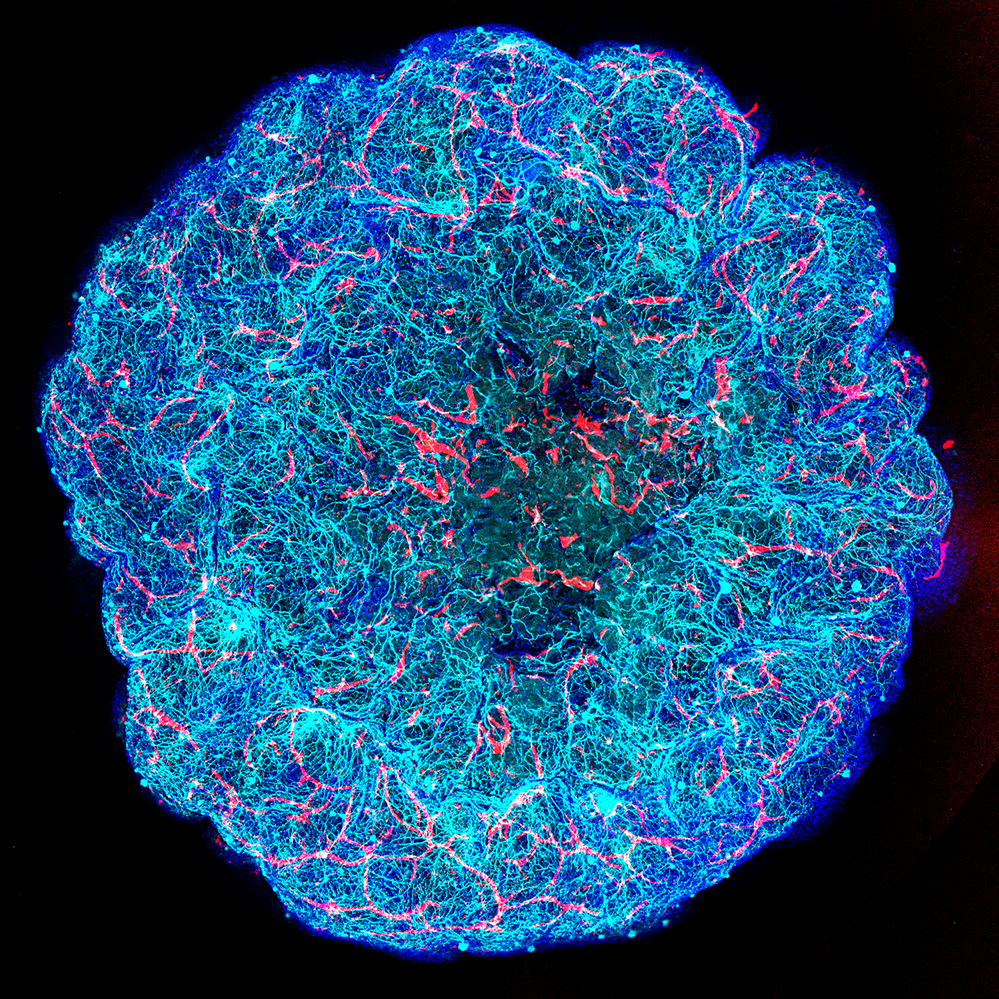
First-in-class integration of all six major brain cell types (neurons, astrocytes, microglia, oligodendrocytes, pericytes, and endothelial cells) derived from donor iPSCs.
Genetic Modularity
Isogenic, editable lines enabling precise APOE4 modeling and patient-specific studies.
Translational Advantages
Superior relevance compared to rodent models or simplified 2D cultures; scalable for high-content screening, lead and candidate optimization.
3D Architecture
Self-organizing neurovascular units in a brain-mimetic Neuromatrix hydrogel that recapitulate functional synapses, myelination, immune signaling, and blood-brain barrier (BBB) physiology.
Proven Impact
Delivering novel insights into astrocyte-microglia interactions driving tau and amyloid pathology (Stanton et al., PNAS 2025).
Potential personalized medicine with miBRAIN
One of the clinical applications at the individual patient level is 3D miBrain brain model can be reconstructed from a person’s own cells. Because these models are built from human cells, they can be matched to a donor’s genetic profile—starting with something as accessible as a skin biopsy.
Donor cells are reprogrammed into induced pluripotent stem cells (iPSCs), then differentiated into the six major brain cell types that make up a miBrain. The result is a 3D model that carries that person’s own genetic signature, down to the microenvironment.
Therefor it possible to study how a specific person’s neural cells respond to a disease process, test how a patient’s cells respond to a potential therapy before the drug is given, and explore why the same disease can look different from person to person at the cellular level.
We are just beginning to learn what personalized miBrains can reveal about individual brain biology and disease.
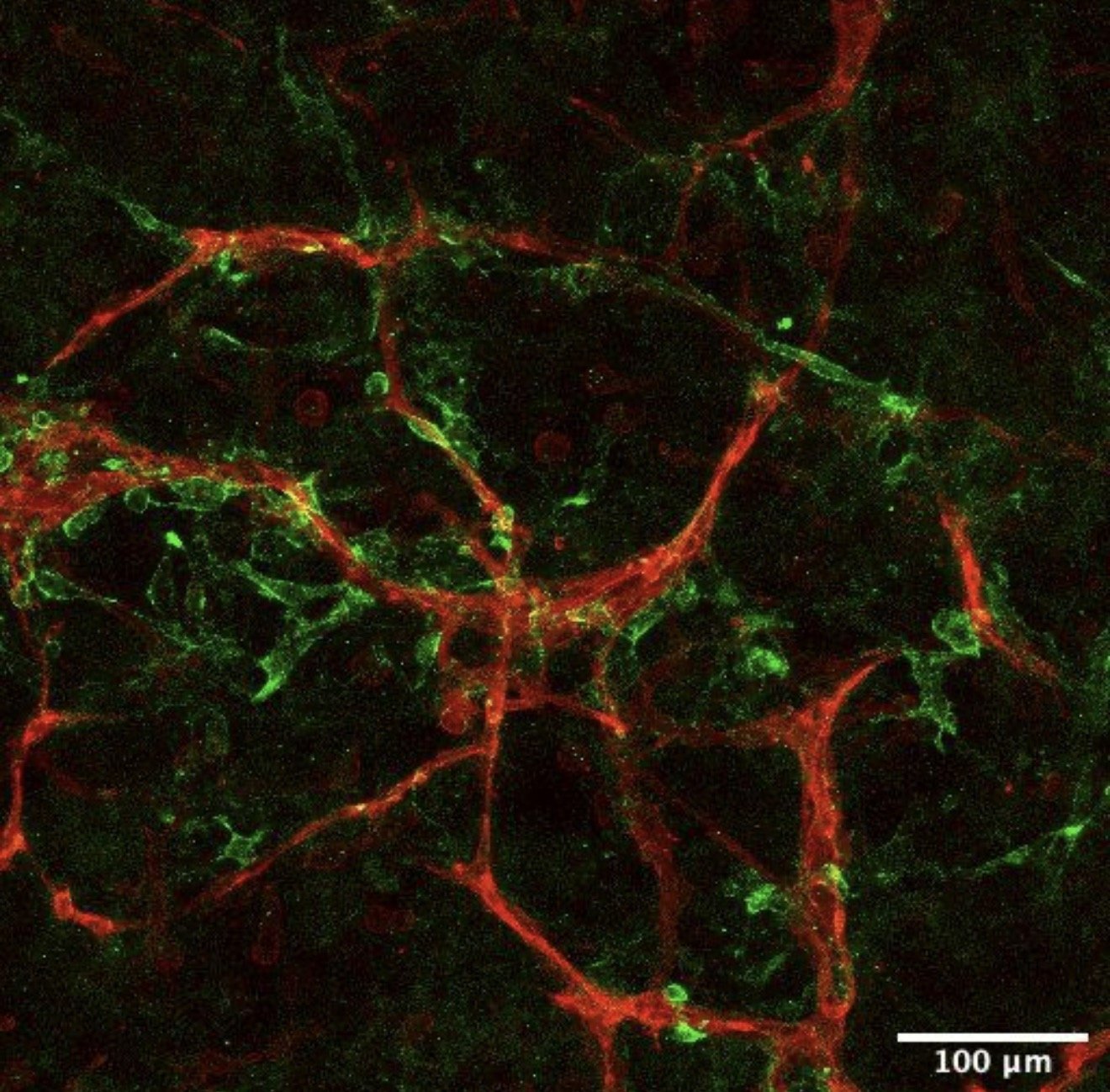
Endothelial cell vasculature (red) and pericytes (green) in a miBRAIN aged for 3 weeks in culture. As the tissue takes on a complex 3D form, pericytes wrap the vessels to support their stability, growth, and barrier function and low magnification of miBrain.